I should preface this review that I found The Pitt riveting television. I’ve always liked Noah Wyle as an actor and ER was always a favorite show of mine. This review will have some minor spoilers for the show so if you have not watched it – go watch it! Then come back and see whether the same things struck you as they struck me. The Pitt has a couple of problems, and they not only take me out of the show when they occur, they also perpetuate the myths that surround human and veterinary medicine (my world).

Administration is the Bad Guy

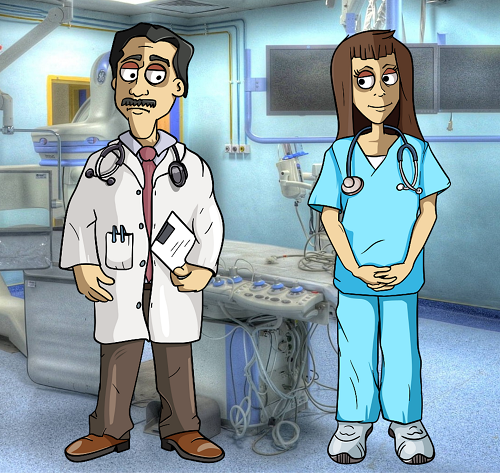
The character of Gloria Underwood, played by Michael Hyatt, who is credited as the Chief Medical Officer but acts as more of a non-medical Hospital Administrator, is portrayed, except for one scene (more on that later) as the bad guy throughout. This is not because they do anything particularly bad, but because they care about how long patients have been waiting and how they are treated by the doctors and nurses. The show treats this push back against the tyranny of customer service as a noble endeavor, as our hero character championing medicine over business.

The big problem with this mindset that can often be found in both human medicine and veterinary medicine is that “my time (the doctor) is more important than your time (the patient). There will always be wait times in medicine, but that does not mean they are a badge of honor that shows how much more important the medicine is from treating patients respectfully. Patients who leave because they won’t or can’t have an extended wait time are punished with worse outcomes. If we want what’s best for our patients we have to care about wait times.

The Pitt then seemingly redeems its portrayal of Gloria by showing just how good she is at her job. When the staff are informed of a mass casualty event, Gloria shows that she is three steps ahead of our hero Robbie, played by Noah Wyle, in having emergency supplies of all kinds already on the way. It’s a great moment and the disconnect between the doctors and nurses as they realize that this person who they consider the enemy is just someone who sees the wood for the trees.

…And then they go and spoil it by having Robbie curse Gloria out and call her a micromanager because she questions their use of unscreened blood from team members in patients.

The fact that Robbie is shown on multiple occasions to be struggling with his own mental health, and that while often right, he prefers to use his own intuition rather than facts or rules is shown as an honorable sacrifice. I hope that in season two we get to see Robbie be wrong because to do otherwise is disingenuous to the professions involved.

Likewise; Dr. Gregory House, from TV’s House, is a great and fun character to watch but nobody wants him as their doctor. When you are purporting to show a hyper realistic medical drama, falling into using these well-worn tropes does the show and its audience a disservice.

Poor Doctors

I have the upmost respect for human doctors and nurses, just as I do for veterinarians and veterinary nurses. I believe they all deserve to be paid well. However, The Pitt plays fast and loose with the socioeconomic realities of the ER and human medicine as a whole.

Dr. Michael “Robby” Robinavitch  is a Senior Attending Physician and probably earns in the region of $361,072 per annum.

 All of the other doctors of The Pitt are residents who are likely to be earning $75,000 per annum although it seems this could increase to almost $100,000. The medical students shown in the show would not be paid.

Robbie is unlikely to walk to work, or take the train, as is implied by his backpack as he walks through the park late at night, after his shift, where he can share a beer with other members of his team. Many of his team will have to use public transportation because they won’t be able to afford not to. Robbie will drive his BMW, which is parked in the hospital parking garage, he may even have his own parking spot, to his home in the suburbs.

Just when you think I might be being unfair about Robbie, I should mention that Pittsburg’s cost of living is about 2% below the national average.

If Gloria is a Hospital Administrator, her salary would be in the range of $223,561

If the job title of chief medical officer is correct we are looking at a salary of $462,913

By making Robbie seem like just one of the team rather than a member of senior leadership it frames Gloria, and therefore by example all Hospital Administrators / Chief Medical Officers, as only interested in money – rather than the health of the hospital and the team as a whole. Whereas in truth, Robbie is much closer or even exceeds Gloria in compensation than to the doctors and students he works side by side with. By framing him as “one of the boys” and therefore the hero it paints Gloria as the villain.

When Robbie complains about the lack of nurses and Gloria points out that there is a national nursing shortage. His response is to say “pay them a living wage and they will be lining up to work here.”

The average wage for a registered nurse in Pittsburgh is $82,458.

As Gloria points out “other hospitals are managing” but Robbie dismisses this and  because he is our hero we are encouraged to dismiss this too – rather than see it as a failure of his management of the ER. I’m all in favor of paying nurses more, just as I am in favor of paying veterinary nurses more, but dismissing $82,000 as less than a living wage is ridiculous and manipulative.

You can do so much better “The Pitt.” These are real issues the divide the treatment of patients and the management of hospitals both in the human world and the veterinary world.

Buying into lazy tropes does not help.
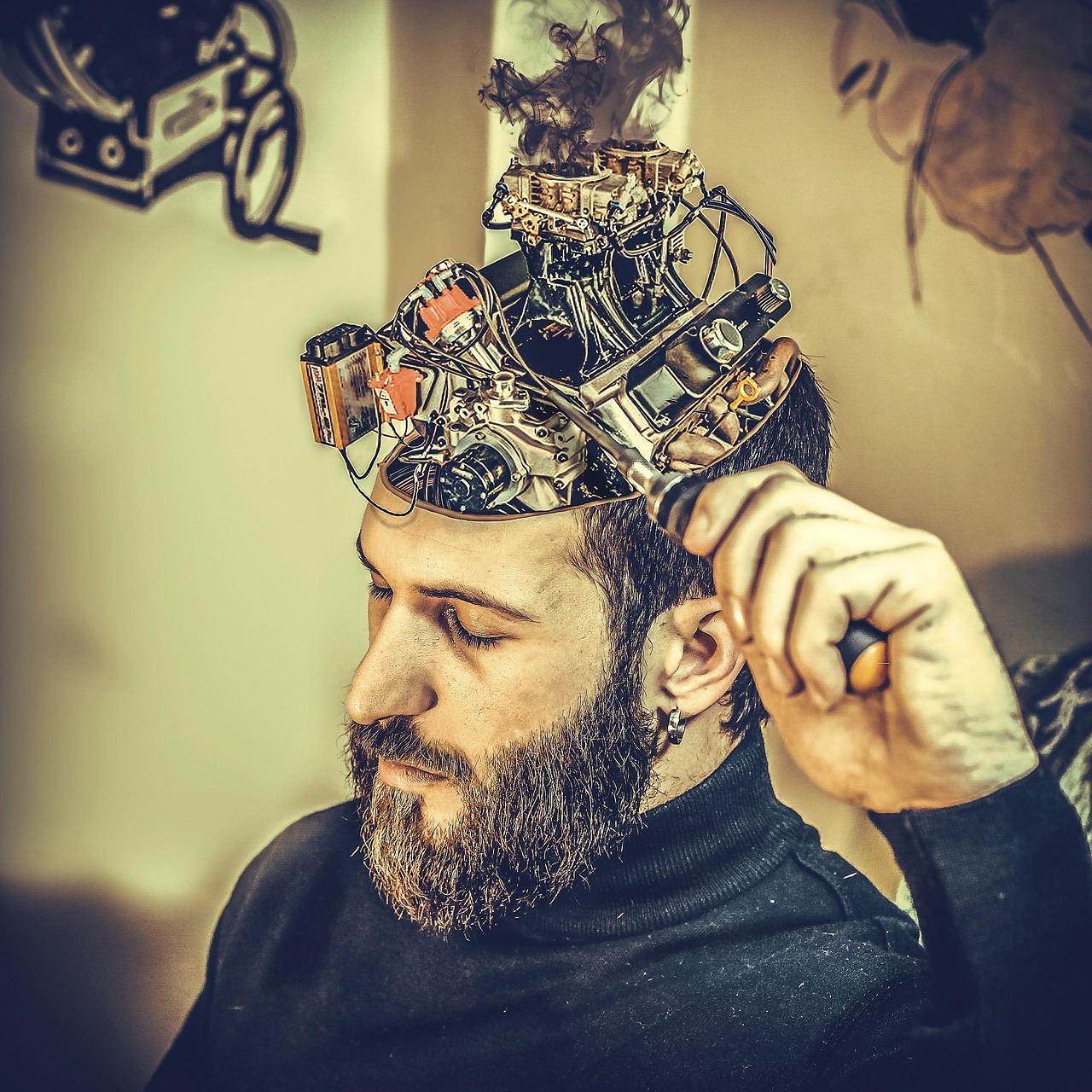
This article is going to use the term AI, even though the more accurate and less marketing friendly term “machine learning” is the term I much prefer. But this article is about you, dear reader, not me.

Reason to Worry #1: Mid-Level Practitioners

I should preface this section by stating that in theory I have no issues with the idea of the creation of a midlevel practitioner in the vein of Nurse Practitioners in the human world. My main concerns are with the fact that the veterinary profession has decidedly steered away from this kind of thing in the past; I’m looking at you Veterinary Technician Specialists (VTS). Show me an LVT / RVT / CVT with a VTS in dentistry who can’t extract any teeth and I’ll show you a missed opportunity.

Colorado State University (CSU) has become ground zero in the midlevel practitioner debate. The idea of a Veterinary Professional Associate (VPA) was proposed as early as 2009 by a member of CSU and an alliance of multiple non-profit animal welfare / rescue groups. This alliance gathered enough signatures for a proposition which was passed despite significant opposition from just about every veterinary professional body. A more in-depth retelling and an examination of the issues can be found here: https://www.avma.org/news/veterinary-professional-associate-role-moves-ahead

My other concern is that there is so little appetite for a midlevel practitioner in the profession that my “spiddy sense” starts to tingle as to what else might come of this VPA.

More on this later…

Reason to Worry #2: The Erosion of the VCPR

Across the country, before, during, and after the pandemic, moves were made to reduce the needs and requirements of the Veterinary Client Patient Relationship (VCPR).

Ostensively, to allow the use of telemedicine to initiate treatment without the need for a physical exam of the patient. While there are some champions of telemedicine from within the profession, clients only seem to have a stomach for it if it does not cost anything or if it allows them to buy medications online.

If the pandemic taught us anything it was that Zoom is a poor substitute for meeting in person.  Meanwhile, the push to allow telemedicine to replace an exam continues..

Reason to Worry #3: AI medical record writing is not what you think.

It seems like every cloud-based PMS software and every veterinary startup is selling a service that takes the conversation from the exam room and writes up medical records in a format that every vet board will love. Sounds like the perfect product: cheap, quick, and removes the drudgery of a task that just about every veterinarian hates – a task that takes time away from patients and clients.

Ignoring the inevitable veterinary board cases where the AI service just gets things wrong and the DVM did not double check – there is where these services are going and what they will turn into.

Machine Learning requires data to learn from. It takes large data sets and as AI commentator Subhasish Baidya states that AI currently is “decent summarization engines and lukewarm guessing machines.”

As Apple recently stated we are a long way off from “Thinking Machines” and the hype about Artificial General Intelligence is misplaced.

So if AI needs large data sets in order to work, so what? It just makes the product better right?

But what if the end product is actually something else entirely?

What else could a machine that learns what is talked about in an exam room do? If the medical record is meant to reflect the diagnostic process, and we are even very nice as to correct AI tools for writing the record when they get things wrong, how long before they starts suggesting the diagnosis for us?

At this year’s WVC conference I was told that it would launch this year.

A Problematic Veterinary Triad

Suggesting a diagnosis based on existing data is not particularly new. The issue is, and I know I start to sound like a conspiracy theorist here, the other two reasons to worry. Because if I can have a midlevel practitioner or even a credentialed veterinary technician perform the exam and talk to the client, and have the results reviewed by an AI that’s reasonably good at coming up with what might be wrong, why do I need a DVM?

Well the practice acts for one I hear you say! Well, my response is to remember about all that weakening of the VCPR? Why does the vet have to be on site? They could be in a different state or even a different country.

We are devaluing what it means to be a veterinarian and the role that they have to play in the care of pets.

I wish that I was super smart and that I could say that nobody else was thinking in these terms and I could claim my tech bro title. That way I could make my AI startup and combine it with my chain of low-cost veterinary clinics bankrolled by venture capitalists which I could then turn around and sell for billions. If I am… well then tech bro’s you’re welcome to my idea – my ethics can’t stomach it.

When I talk to vet students about this problematic triad they are horrified – literally horrified. When I talk to people who think about the future of veterinary medicine, they say “of course” and then tell me how they are planning to leverage these things.

When I talk to practice owners, they either reject the premise or shrug their shoulders and say “so what.” Nobody is looking to make AI models that replace upper management at the moment. We are the ones who buy those tools – tech bros are not stupid in that way.

When I talk to AI companies at trade shows (one of my favorite pastimes these days) and ask where they got their modeling data they are surprisingly evasive – particularly when you bring up the ownership of records and privacy.

The fundamental issue is that using machine learning to reduce the need for a DVM onsite, or the number of DVMs will come down to how much money is saves / generates. It’s a rare company that puts anything ahead of the bottom line. Particularly as those companies get larger.

A common saying from the AI world is that AI will not replace you but that a human using AI will. I hate this saying because it is so disingenuous. If I employ 10 technicians with AI tools and a DVM in another state to review everything, to replace 10 DVMs I am technically in line with this quote. But nobody would agree that AI has not replaced the 10 DVMs. Even if I just gave those same 10 DVMs those same AI tools their productivity is not going to increase to the level where the technicians and AI don’t make more sense from a purely economic standpoint.

Reason Not to Worry #1: AI is Self-Limiting

Ignoring the lawsuits about copyright infringement in the training of machine learning models for the time being, AI always needs new data to “learn” new things. Who is going to provide this new data for the diagnoses of new conditions or new treatments if we are just relying on an AI to make the diagnosis in the first place?

I also feel that the reliance on AI to write records will increase the reliance on AI tools that will summarize records into a few simple sentences. I have enough faith in my fellow humans to hope that the result of this will just be recognition that simple records are just better in the first place and why don’t we just write them that way. The alternative is complete madness when data is kept in some arcane format that no one actually reads.

In addition, the “hallucination problem” with AI does not seem to be anywhere close to being solved. For those who are unaware, AI’s “hallucinate” wrong data all the time. In technical circles we call this “getting things wrong.” Yes, you heard right; AI’s get things wrong all the time. There are numerous lawyers who have been cited by judges for submitting AI briefs that contain references to cases that just don’t exist.

The AI world calls these missteps “hallucinations” to make their products seem better than they are. More complex and “thoughtful.” What they actually mean by hallucination is that the AI got things wrong and they don’t know why.

Reason Not to Worry #2: Human Interactions Matter

There will be value in not using AI. Just like there is value in not allowing your work to be scraped by AI. Just like in film, music, and art, the use of AI is distinctly frowned upon because the consequences of doing so are so harmful for everyone involved. Why pay to use a tool, made by someone in Silicon Valley, that would not exist without the theft of material that the tool must have used in order to work?

Likewise some clients, admittedly not all, will value face-to-face interactions with their veterinarians as long as we make it worth what we are charging. If COVID taught us nothing else it is that a virtual appointment, like a virtual meeting, is a sorry excuse for the real thing. Why would veterinary medicine be any different? Medical records that read like they were written by a human and are understandable will have far more value than those that might be more technically proficient but don’t reflect the personality of the DVM.

In fact, humans are so much better at these interactions than AI that a surprising number of AI startups and tools are actually just low wage humans working in other countries remotely.

Reason Not to Worry #3: The Power of Community

While the midlevel practitioner for veterinary medicine bill was passed in Colorado, nobody seemed particularly happy about it. An alphabet soup of state and national organizations came out against the idea of midlevel practitioners and this bill in particular. Even the vet school at Colorado State, from what I can tell, was not enthused about being connected to this new position.

If the profession can fight back against the midlevel practitioner it can fight back against other things such as remote DVMs and hospitals just staffed by technicians all the way through to AI’s role in the diagnostic process. It might even win some of these fights and we will be stronger as a profession if we get used to fighting for what we believe in.

I do actually think machine learning does have a role in veterinary medicine – just like I think it has a role in business in general. My issue is that we are giving little to no thought to the consequences of using these tools wherever we can squeeze them into.

Part of the thought behind these six points is that I do believe that it will probably all work out in the end. It is the damage done to the profession in the meantime that concerns me most. That it might be too difficult to undo that damage and far too late to avoid the suffering caused – whether its lower wages, missed diagnosis, or a radically changed business model for the average veterinary practice which will now lack the skills needed to reject using AI even if it wanted to.

I’ll leave you with a final thought. If AI is writing all your emails so that you don’t have to write them and summarizing all your emails so that you don’t have to read them, would you then have the critical thinking skills to know when the AI had made a mistake? Why would we think veterinary medicine would be any different? I’m not suggesting that all technology is bad, but I think this quote, often attributed to folklore hero John Henry, says it best;

“When a machine does the work of a man, it takes something away from the man.”

Image by aytuguluturk from Pixabay

Veterinary Medicine is about communication. Our patients don’t speak. They can’t advocate for themselves so pet owners, doctors, and team members must communicate with each other on their behalf and as clearly as possible.

However, there is a relationship within the practice which is even more important. It is that of practice owner (PO), usually a DVM although the same applies to corporate practices with a medical director, and the hospital administrator / practice Manager / office Manager (OM).

If these two people cannot agree, or agree to disagree, all the other great things that can happen within the practice are subject to failure on a monumental level.

Everything flows from this relationship.

Protocols and standards of care can’t exist if the two people responsible for implementing them can’t agree on what they are and how they should be applied. How can equitable and fair human resource decisions be made if one of these two people plays favorites and overrides the other when it suits them? They must be able to have difficult conversations, where they both will have strong feelings about the results, and must be able to come out of that conversation without hard or hurt feelings that get in the way of their continued relationship.

Vision, Mission, and Core Values statements can go a long way to resolving these issues – but only if they are the living breathing guidelines of the practice. More fundamental is that there is mutual respect between PO and OM for both their respective roles and their responsibilities. They also need to present a united front on matters of change.

Unfortunately, this relationship is often unequal. Practice Owners, by definition call the shots and have the last word. Ideally, they empower their OM as their representative to make decisions and implement policy. However, if there is no trust, no respect, there is no way that is going to happen and no way for the OM to do their job. Likewise, if the OM is constantly aligning themselves as an employee rather than as a member of senior management / ownership they are unlikely to receive the trust from a PO that they would want and rightly so.

There is a balance to be reached and that’s why I advocate that the relationship between PO and OM has to work for anything else in the practice to work. This is also the reason why I am always against PO and OM being married or related in other ways – other parts of their relationship creep into the PO and OM dynamic. PO and OM should not be best friends – there are times they are going to disagree and that’s fine – that’s how it is supposed to be. They represent different interests of the business.  

So what if that relationship is not there or there has been a breakdown?

Communication.

Communication.

Communication.

Fundamentally if PO and OM can’t communicate then the relationship is dead. Unfortunately, that probably means the OM needs to leave either by resigning or being let go. It does no good to anyone for there to be infighting between the leaders of the practice. It certainly does not help the practice.

What sucks for the OM in this situation is that jobs of that type in the veterinary industry are usually one per practice. That means if there are ten practices in your town then there are only nine possible jobs for the OM and there are no guarantees that any of them are looking. There are, of course, opportunities in other industries; good leaders and managers are always in demand; however, that means learning another industry.  

If the relationship between PO and OM is broken something must change because this is the relationship that can’t be broken for the practice to function. Take care of your own mental health and that of your team.

Be honest about this relationship and either fix it or move on.

Feature image courtesy of Zahid H Javali & Dmitry Abramov from Pixabay

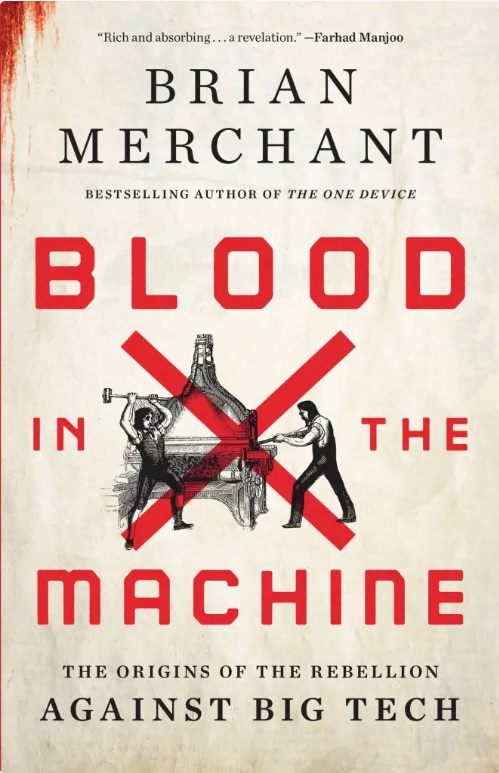
Blood in the Machine cover

What comes to mind when you think of the term “Luddite?”

For the more historically minded of you it might be that they were a British 19th-century grass roots movement that were opposed to, and smashed, technology due to losing their jobs at the start of the industrial revolution.

More usually, “Luddite” is used as an epithet to describe someone who refuses to embrace change, usually technological, or insists on doing things the hard way when a simple technological solution exists. Reactionary idiots who were doomed and dumb. Malcontent losers.

These are both corruptions that were deliberately foisted on the public by those who had the most to gain by discrediting the movement: the State and the “big tech” entrepreneurs of their day.

In “Blood in the Machine: The Origins of the Rebellion Against Big Tech” Brian Merchant does a most remarkable thing for a book on a historical subject. He places events from the beginning of the 1800s in context with the events of today and the same challenges we currently face when it comes to technology and work.

The first half of the book is a history of the Luddite rebellion. Its early beginnings with workers refusing to cooperate with inventors on the design of machinery that was clearly created to put them out of work, to civil disobedience and protest, and then ultimately to the very brink of civil war. While the first half of the book does occasionally highlight just how close some the challenges that 19th century weavers were facing are to modern day concerns, it is the second half of the book which focuses on the “gig economy,” A.I., and other forms of modern automation.

What becomes clear throughout the book is that the Luddites were not sheep afraid of change. This was a nuanced, decentralized movement that had clear goals and wanted to embrace technology and change, but wanted their needs and livelihoods taken into consideration. Weavers were artisans who worked for themselves, setting their own hours, and involving the whole family in their work – but on their own terms. The industrialized mills that replaced them employed mostly woman and children working long hours for low pay and producing a lower quality product that was “good enough.”

A theme that crops up both in the 19th century section and the 21st century section is the concept of the replacement of skilled workers with cheaper lower skilled workers. Mr. Merchant also spotlights the outsized role that venture capitalists play in this dynamic – financing a cheaper alternative to one industry to the point of bankruptcy and then either raising prices or lowering wages of those now forced to work for the bright and shiny new thing: Uber and Lyft I’m looking at you.

The Luddites were met with brutal resistance. Factories became fortresses and soldiers were based in every northern town. This was a time when Britain was in a deeply unpopular War with France and was losing its American colonies. Dozens of Luddites were hanged, mostly for the breaking of machinery, and those who took the Luddite oath were often transported to Australia – a life sentence at the time. All for opposing profit over people.

While not only warning of the impact that disruptive change, both in the past and the present day, the author also adds the note of caution about how people are already pushing back against the same type of change as the Luddites fought against over two centuries previously. The strikes, organizing, and protests by Uber and Lyft drivers to be considered employees rather than contract workers. The organizing at Amazon during COVID-19 over safety concerns. The Hollywood writers strike over using A.I. technology.

These are not isolated incidents.

They form a pattern of how technology is often imposed on people without thought as to its impact. That the technology that is supposed to alleviate work often just degrades it. Just the lexicon of Silicon Valley points to this: “disruption,” “move fast and break things,” “Revolutionize.” To ignore these warning signs could quite possibly doom us to repeat the mistakes of the past.

There is often, from both Hollywood and the media, a hysteria that “the robots are coming for your job.” As Brian Merchant points out; the robots are not coming for anything. It is the people who run companies and implement technologies that decide the impact they will have on peoples’ jobs, and ultimately their lives. This needs to be a discussion, separate from the also highly needed discussion on how machine learning is trained, and how venture capital distorts the business landscape. All these discussions are related, but we have real choices ahead that we will all need to make.

It is interesting to reflect on what might have been if the Luddites had won. There would still have been an industrial revolution, but perhaps the assumed antagonistic relationship stances between management and employees, whether real or perceived, might have had a very different starting point. We can’t change what happened to the Luddites, but we have all the indicators that we have an opportunity ahead of us now.

This is a book for our times and a warning about one possible future.

I have a problem.

I love my smart phone a little too much, and I hate that.

A cell phone has been my constant companion for over 30 years. I never had one of the giant brick phones of 80s yuppies but my first phone was one of the first that made those phones look ancient even then.

However, the advent of the iPhone and social media changed all that.

I’ve spent a significant portion of my career working, at least tangentially, with social media. I still enjoy social media and find it to have value, but I am more and more aware of the downsides. I think the real turning point was TikTok. The pull of those short form video snippets was often just too much on days where not much was going on. Losing hours to the app, while not all valueless (poetry, politics, history, and religious scholarship can all be mixed in with the stupid cat videos and hilarious footage of people hurting themselves) was disconcerting. Like the borderline alcoholic that realizes that perhaps always having beer in the house is not such a good idea, when the app starts warning you that perhaps you’ve been on it too long, you know there is a problem.

I should make clear that I still like and enjoy social media. I’ve been making content for social media and the internet for well over two decades. Call me shallow, but I have much in my life to thank social media for. I also feel that its current place in society is so firmly cemented that to be without it would be detrimental to how I live.

But something had to change.

I’d turned off notifications years ago, no longer being the frontline person responsible for the hospitals’ I manage social media and reviews, has its advantages. For my own personal pages and sites, a brief check whenever I had a moment would do.

But the checking got way out of hand.

Sitting at my desk and getting sucked into checking the groups I was a part of, my social channels, and even personal email seemed to consume more and more time. Even more insidious, was the “always on” home display on my iPhone 14 Pro.

I’d managed to resist the draw of Apple Watch and other smart watches. Partly due to my affinity for real watches, but also because the constant checking seemed even more intrusive than I was already experiencing and harboring qualms about. It also helped to have coworkers who love their Apple Watches and them checking them while mid conversation was annoying enough to “not be one of those people.”

However, the extremely useful always on of my new, at the time, iPhone 14 Pro with its time and date display along with a cute picture of one of my dogs was gateway and constant reminder of the joys of browsing my phone.

But how to change.

When I travel, which I do a lot of for significant portions of the year, the scene in airports is one of obvious Smart Phone addiction. Rows and rows of people, not talking, not reading a book, but low level browsing of social media. I’m not judging, I still am happy to while away the time lost in this miracle of our modern age – the interconnection of smartphone, the internet, and social media.  However, the sheer scale of how much these little devices of glass, metal, and plastic have come to be extensions of our modern selves can be shocking when one takes the place of an outside observer.

But what to do.

It seemed, I was not alone in wanting to make a change in the cycle of cellphone social media and attention-grabbing content intruding on life. Multiple celebrities were announcing their ditching of social media, and there were even a few who were getting rid of their smartphones altogether. But this removal of this seeming essential device of the 21st century seemed to reek of privilege. For every celebrity who is removing the stress of social media and the constant interruptions of a smart phone, you know there is an assistant and / or a marketing team who filter access and are ever more locked to their smartphones as they juggle their own needs and that of those who employ them.

So what for mere mortals?

I had become aware of the Light Phone when it first launched, and I laughed like most people at the idea of wanting a Dumify phone and there being value in that. Now on its third generation, the Light Phone contains a lot of the conveniences of modern smartphones but with a monochromatic interface, limited apps, and no social media.

The downside of course being that I want and need social media in my life. I want and need various apps on my smart phone, to control alarm systems, remote access to work computers, control of my smart home, control of my electric car, notifications of the location of my keys, wallet, and dogs, and any number of other things that make up a connected life and work.  I was not ready to give up all that. I’ve read Ted Kaczynski and the Luddites, and I have sympathy with those arguments, I’m just not ready for the inconvenience, the disconnection, or in a place of that level of privilege, to make such a radical change.

An option would be to slave my iPhone to a Light phone as a hotspot. Meaning my iPhone could stay in my car or bag until I wanted it, but I could carry around a Light phone for day-to-day use. This seemed a needlessly complicated solution and I was also unconvinced that the temptation of the iPhone would not be too much and I would be back to square one but $500 poorer.

Then I found Dumify.

Dumify is an iPhone app, also available for Android users but you are on your own from here on out, that mimics the simpler interface of the Light phone, but does not impact the functionality of or even the regular interface of the iPhone.

By adjusting a few settings, and then just entering the apps you want daily / easy access to, the user can create a non-engaging, and thereby not tempting, interface for the things that matter most to you in a smart phone.

After a few weeks of use here is what I have found.

My smart phone screen time at work has plummeted making me far more productive when I am at my desk.

I still use and enjoy social media but it is as a choice rather than a need. I am therefore finding it limited to specific times of the day.

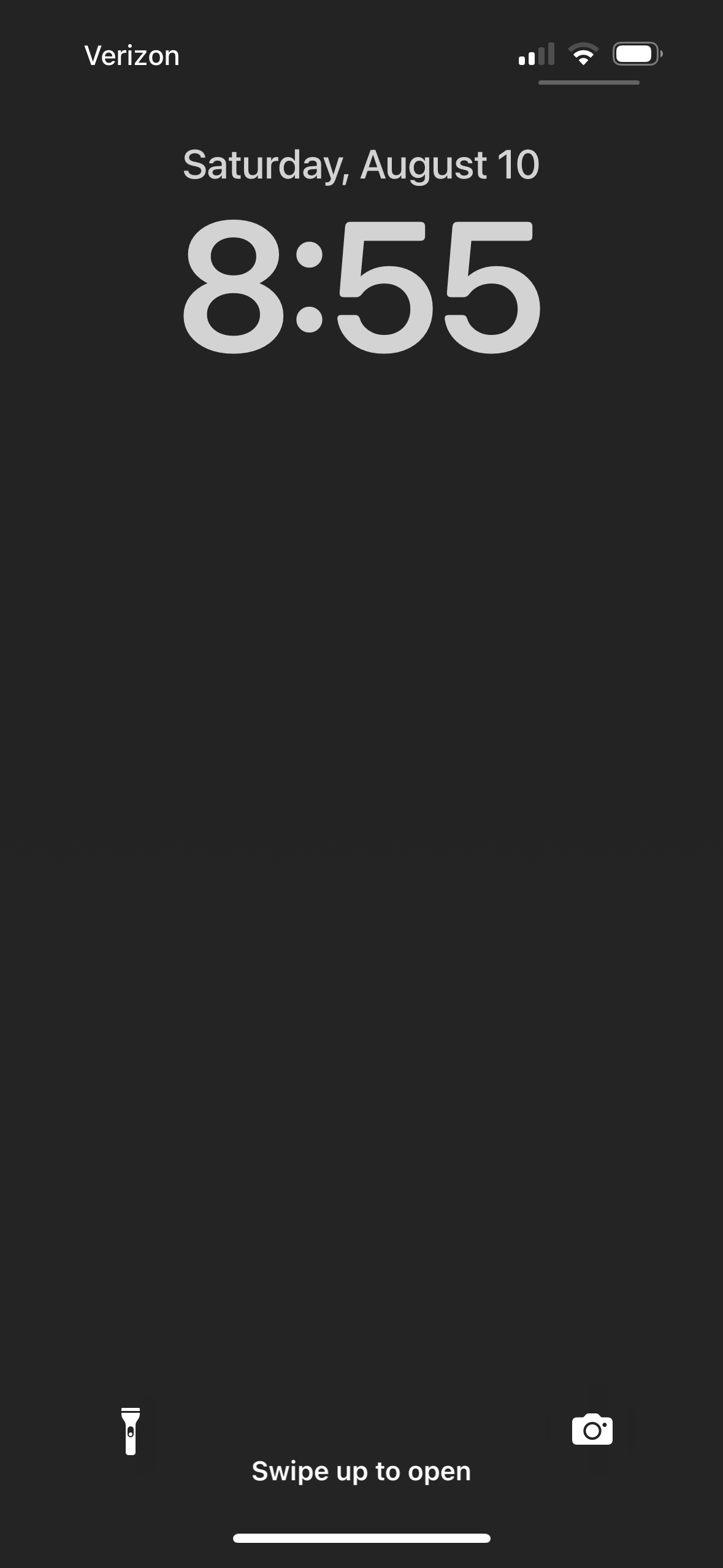
My simplified lock screen – see below – still can be a temptation but far less so.

In addition, when I open my phone, I get an immediate reminder that I really don’t need to be checking Instagram, Goodreads, LinkedIn, or whatever, right now due to the interface. That simple reminder, a reminder of virtuous smartphone usage if you like, is all I need to put my phone down.

Many people, when using a tool like Dumify, delete a lot of their other apps. I have not done this. I still like my iPhone. I just use it differently. A bit like being smart about alcohol consumption while driving. An unexpected bonus has been that I have been finding myself leaving my phone in my jacket pocket when I’m in the car. The temptation to check an app while at a set of traffic lights is now gone.

While the setup of Dumify is simple, and the app contains shortcuts to most popular apps, some research for company specific apps may be required. There are also multiple short videos embedded into the app to help the customization process. On the iPhone, the app uses URL Schemes and while it blithely suggests “just search on Google” for anything the app does not already have, I found this a little more complicated than I would have hoped. This might say more about the appalling state of Google search right now, than a lack of awareness by the app developers.

I found this article on URL Schemes extremely useful, however I did end up finding a few on my own either through searching or trial and error. It should be noted that the app uses a very basic implementation of URL schemes, and a lot of the documentation is about how developers can hack iPhone apps to do very specific things. When this is the case, I found just stripping the URL to its most basic form worked great.

These are the URL schemes I ended up having to make myself. I made most of them through trial and error as they are pretty simple.

Harmony Remote          harmony://                       

Hertz                                    hertz://

Lyft                                        lyft://

Music                                   music://

Open Table                        opentable://

Outlook                               ms-outlook://

RingCentral                       rcapp://

Southwest                         southwest://

Wallet                                  wallet://

Itunes Remote                 remote://

Dumify will also make you download a second app for some links. But this is seamless once it is downloaded.

Dumify is a onetime $4.99 purchase – another reason to love it. There are couple of other apps out there that do similar things to Dumify, but they follow a subscription model, and I was less impressed when I looked at them.

Dumbing down your smart phone is not for everyone. Just like being always connected is not for everyone. But it is nice to have choices, and I feel genuinely more in control of my time and feel that access to this wonder of the modern age is now on my terms and not on its terms.

Management is different.

Often, managers are not owners of a business, but they are required to act as if they were. That can mean that they become the person that both team members and ownership feel is there to solve their problems. To be on call all the time. To be the fountain of knowledge whatever the time and whatever the day.

And often they are.

But that does not mean they are not entitled to time off and a personal life.

Setting boundaries with your owners and your team does not mean not being there for them when they really need you, but it should mean that your time is respected and valued by those that depend on you.   

Schedule Boundaries

As a manager, it is easy to feel that it is your duty to be there for your team, or whomever you report to, at all hours of the day and every day.  

And to a certain extent this is a sign of a good manager. Your team needs to be able to count on you being there when they need you to be.

But….

And this is a big but…

There is a huge difference between being available for an emergency and being available at all times for all things. You have a life to live and just because you hold the title of manager and all that it entails, does not mean that your job gets to monopolize all your time.  

Have a schedule and make all efforts to stick to it. The work for most managers will be there the next day. That means you can leave on time. While staying late will reduce that work pile a little, it will not be as beneficial to the business and certainly not as beneficial to you if you just leave when you are supposed to. There will be times when you absolutely will not be able to leave on time. Make those the exceptions rather than the rule.

Take your vacation time and take the holidays you are owed. Never feel guilty about taking the days off you are due. Your mental and physical health will thank you. As one of my favorite phrases goes; “Make time for your wellness or make time for your sickness.”

If there are times that you don’t want to be interrupted – turn your phone off. You turn your phone off when at the movies or at the theater (if you do not there is a special place in hell for you) so a couple of hours of being unreachable is not an unreasonable thing even for the most connected of managers. Your partner and family will thank you.

Communication Boundaries

Managers need to have a system for how and when they should be contacted. If there are things that you require your team to contact you about then make sure they know this. I, for example, want to be called as soon as possible if there is a major I.T. issue so I can have time to fix it – even if that means a phone call at 2AM. If there are things that you don’t need to be informed about, make sure you let your team know that as well (be nice – just redirect: “please email me about this and I will deal with it when I’m next in the office.”

Email is for when you are at work. Do not check your email outside of working hours unless you are explicitly told that there is something you need to read immediately. An example of this would be a phone call or text message that says “check your email. If you have a workplace communication platform, such as Slack, turn off the notifications when you leave the office for the day.

Text messages should be for urgent things that need your attention when you have a second but can’t wait till you are next in the office. Again, if they could be an email – politely redirect and have them send an email. Stay away from work related text message groups and Whatsapp groups. Group messaging in general is not respectful of your time so if they are part of your team’s communication system – find a way of being able to dip out when you are out of the office.

In fact, while you are at it…

Turn off all the notifications on your phone. Notifications should be for things that are true emergencies. You can thank me later.

Answer phone calls. It might sound counterintuitive in an article about setting boundaries, but I believe that when teams need to get hold of their manager, they really need to get hold of them. If they abuse this privilege just redirect and move on. There are times when you’ll wish your team called you. The excuse “we did not want to bother you” is usually a reaction to mishandled boundary setting in the past.

Longer Absences

There are times when you need to not be working.

Vacation, maternity leave, and leaves of absence are perfect examples of this. An email to your team, or whatever communication method you use, that lays out explicitly your level of availability will work wonders. You just have to stick to it. It is not anyone’s business whether you are floating at home in your pool or hiking at the North Pole and it should not change your level of availability outside of what you laid out to your team before leaving.

The Boss

But what happens when it is the business owner, or whomever you report to, who is not respecting your boundaries?

Ideally, an owner / director should understand that your time is your time. Yes, there will be occasions when they may need to talk to you or have you do something, or even come into the office outside of your normal hours, but as mentioned before this should be the exception. If it is not, be sure to keep track of these occasions and bring them up when negotiating salary and other parts of your compensation package.

Like with your team members, don’t be afraid to redirect politely when a communication method is inappropriate. Likewise, if you are being asked to do something and you have other commitments, don’t be afraid to say that you have other commitments; however, if you can give an alternative solution that often is a preferable option – such as calling someone else. Depending on the circumstance, it might be more appropriate for you to take temporary ownership of the issue and then to delegate the response to someone else if that is possible and you are unavailable.

Personal Boundaries

A manager’s life is much simpler if they are not friends, and do not socialize with, the people they manage. It’s harsh, particularly for managers who may have worked alongside team members they are now being asked to manage, but it invariably leads to issues and it is just simpler for it to never happen.

Likewise, never confide in a subordinate. Being a manager can be lonely – particularly if you are the sole member of management. But find a mentor, or a peer to confide in and vent to. A subordinate you like and feel you can trust is still a subordinate and you don’t know when conversations you felt were in confidence might come back to bite you when you have to manage or discipline that employee.

It should also go without saying that relationships between managers and subordinates are a terrible idea for both parties. Even if the relationship is not inappropriate and fully consensual the damage it does to the team can be significant. In some companies, having a relationship with a subordinate would be grounds for termination. If you find yourself in a relationship with a subordinate, disclose the relationship to whomever you report to and make sure that you and the other party sign a relationship agreement.  

Appropriate Outlets

As mentioned earlier, management can be lonely. Finding outlets to discuss issues and the challenges you face are extremely important. There are often local manager groups you can take part in. If there is not one – start one!

Internet groups can be an extremely useful in connecting you with likeminded managers, but also extremely rewarding when you are able to help others who may be struggling with issues you have already resolved.

Find a mentor, go for coffee or lunch, and use them as an outlet. Mentors can be found in the most unlikely of people and places; however, it is tough to beat LinkedIn. Connect and make your connections more than just people for whom you like their posts.

You can have boundaries and still be there for your team. However, you must also demonstrate respect for your team’s boundaries. Do you really need to reach out to one of your team on their day off for a piece of information or can you just email them and wait for the answer when they are next in? Yes, it is inconvenient, but you can’t ask for boundaries yourself and then not respect boundaries for others.

Boundaries are selfcare for managers. Boundaries will be different from one manager to the next.

That’s fine.

Just take care of yourself.  

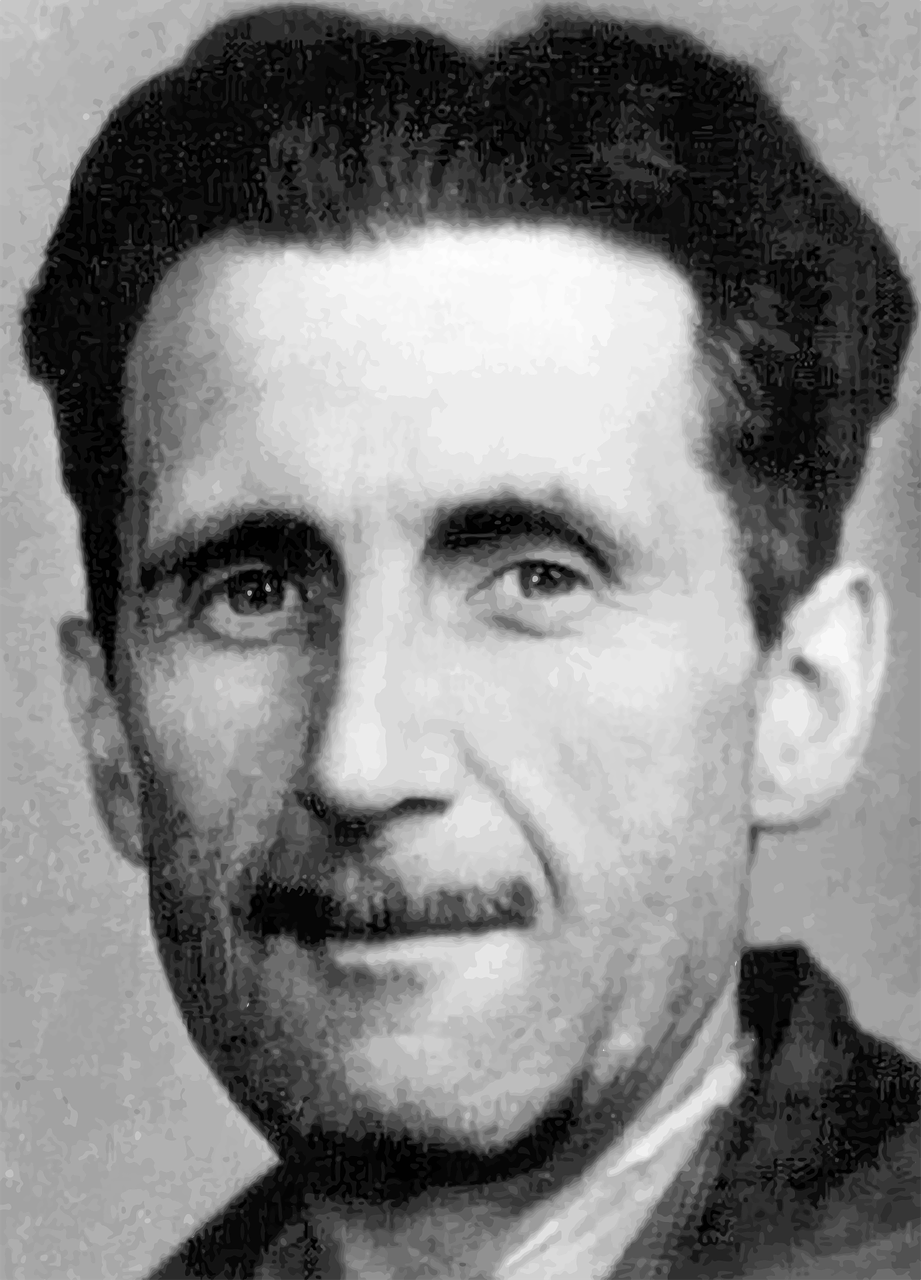
Image of George Orwell by Gordon Johnson from Pixabay

“Any sufficiently advanced technology is indistinguishable from magic” – Arthur C. Clarke.

In a remarkable about face for a technology company, Amazon has confirmed that it is moving away from its “just walk out” technology at its Amazon Fresh stores. The technology boasted that it used a mixture of cameras, sensors, and artificial intelligence (A.I.) to know what consumers had put in their baskets and to accurately bill its customers without all that tedious checking out and interacting with another human being at the grocery store.

Image Copyright Amazon.com used under fair use for criticism, comment, or news reporting.

What was actually happening was that up to 1,000 people in India were watching and tagging videos to ensure that customers were billed correctly. Amazon has apparently laid off almost its entire development team of this “technology” and will start to phase out this service from its existing Amazon Fresh stores. This is all the more surprising after Amazon’s experience with A.I. recruitment. In 2015 Amazon had to abandon an A.I. résumé reading project due to being unable to stop it from discriminating against women. It was seen by many as a humiliating comedown for the tech giant.

Image Copyright Amazon.com used under fair use for criticism, comment, or news reporting.

“Pay no attention to that man behind the curtain!” — The Wonderful Wizard of Oz, L.Frank Baum.

While many will smirk at Amazon’s second major public A.I. failure, and I have to admit to being one of those people, there is a bigger issue here which Amazon should be commended for. It is the lifting the vail on A.I. tools that are not some magic that comes out of the ether. They often require human intervention to be usable- both in front and behind the keyboard. In addition A.I., or more accurately Machine Learning , need examples of human labor in the thousands, if not millions, to be trained. The training of these A.I. “models” has become a contentious subject for those with an interest in A.I. both as supporters and critics.   

“Any technology distinguishable from magic is insufficiently advanced” – Barry Gehm’s corollary to Arthur C. Clarke’s original quote.

The main issue with machine learning is that the A.I. industry, almost without exception, sees art, music, writing, film, and pretty much the entire internet as fair game for training A.I. models, which they in turn sell to us in the guise of generative A.I. Those of us on the other side (waves hand in air to indicate exactly where I stand on this subject in case you had not already guessed) say that copyright does not work that way. Derivative works are still derivative.

 It is indeed hilarious to watch companies such as Disney try to navigate this brave new world. On the one hand, Disney has tried to argue that generative A.I. is fine for them to use to create new works based on the work of artists they have employed in the past. But Disney has then complained about possible copyright infringement when someone else has tried the same trick with copyrighted works they own.

Image Copyright Walt Disney Company used under fair use for criticism, comment, or news reporting.

The lawyer who used ChatGPT to write a legal brief might want the machines to infringe a bit more. To his cost, literally, the lawyer found out that the pesky machine had just made up all the cases that it sited in its argument which he signed his name to. He was sanctioned and fined after he was found out. I just love that generative A.I. tools hallucinate (the developers term, not mine).

One of my favorite activities these days is to ask A.I. peddlers what they use to train their models. Indeed, I had a most entertaining afternoon doing just that at this year’s Western Veterinary Conference. Amongst the answers I received were “none of your business – who are you” (my favorite), “medical records from a university,” and “the internet.” None of the vendors I spoke to were willing to discuss privacy, copyright, or what happens if they are no longer allowed to train their models that way. One gets the distinct impression of building on borrowed land.

The latest darling of the A.I. generation tools is Sora, which creates beautiful full motion video from text prompts and is from the OpenAI stable. However, in a recent interview with the Wallstreet Journal, Mira Murati, OpenAI’s Chief Technology Officer, refused to answer questions about where Sora’s data set for modeling came from. Murati also refused to say whether the data set that Sora used included YouTube and Instagram videos – stating that she “did not know.” That in turn has led to some serious questions about licensing, as YouTube’s CEO Neal Mohan, confirmed that OpenAI using YouTube content for modeling purposes would be a violation of YouTube’s terms of service.  

“Thou shall not make a machine in the likeness of a human mind” – Dune, Frank Herbert

There is a temptation to label those who speak out about our current infatuation with A.I. tools and criticize the foundations those tools are built on as luddites. While our current use of the word brings to mind hoards of unemployed mill workers bent on smashing “the spinning jenny,” the truth about the Luddites is actually far more nuanced and carries a message for today.  The Luddites did not hate all machines, they in fact were fine with most and just wanted them run by workers who had gone through apprenticeships and were paid decent wages. The Luddites main concern were manufacturers who used machines in “a fraudulent and deceitful manner” notes Kevin Binfield in his book “Writings of the Luddites.” Outsourcing the cashing out of grocery shopping to a developing country, and labeling it as new technology, is a tactic the Luddites would have been all too familiar with and would have been happy to march against.

While I am not advocating for a Butlerian Jihad as Herbert described as the backdrop for Dune, there is merit in the context he provides to the proscription on thinking machines.

“Once men turned their thinking over to machines in the hope that this would set them free. But that only permitted other men with machines to enslave them.” – Dune, Frank Herbert.

As author SJ Sindu wrote on Twitter (I refuse to call it X on general principles); “We don’t need AI to make art. We need AI to write emails and clean the house and deliver the groceries so humans can make more art.”

A.I. art needs human art to model itself on and the pushback from artists and consumers is already significant. When the argument over modeling reaches the courts, the damage may already be done. Only then will we see the parallels between the creative arts and A.I. that we saw in the 2000s with Napster / Pirate Bay and music. Will it be too late to put this tool back in its box?

A healthy skepticism when it comes to A.I., I think is all important. And not just a skepticism for what A.I. can do but for the intentions of those that wield it.

A.I. will need to be “open” and not just open as in the name of a for profit corporation. Its models will need to be transparent and be able to be questioned. As I wrote about in my review of Hilke Schellmann’s book on A.I. in hiring and Human Resources “The Algorithm”; …it is often difficult to impossible for candidates or employees to challenge decisions by managers which they may feel have been affected by bias. How much more difficult is it when it is not a human making the decision or recommendation? A tool of which we cannot ask the most basic of questions: what were you thinking?

Footnotes and links would be a great start. But most generative A.I. companies consider this proprietary information and therefore refuse to provide what would seem a most obvious step when it comes to trust. That, in fact, is exactly why authors use footnotes and links, to allow others to follow their thinking on how they reached their conclusions. I’ve tried to add as many links and footnotes as I can to this article without becoming burdensome.

I am not a Luddite in the modern sense, but I do share a lot of the same concerns of the Luddites of old. We only need to look at our world to see why we should be concerned. It is a world where poor people in the developing world watch us shop so that we can pretend we are living in a magic future where machines do all the work. Where the drudgery of making art has been taken away from us so it can be sold back to us by corporations owned by billionaires.

I’m not sure I want A.I. to write my emails, but I can think of plenty of things that I’d like it to undertake. I already use it in a number of ways. I’ve used A.I. images in my books (although I probably will not do so in the future). I currently feel that A.I. has to earn its place in my world by proving its benefits not just to me, but the world as a whole. Will the undertakings of A.I. be for the benefit of people? Currently, that seems to be the last thing on the developers’ minds.

“The tune had been haunting London for weeks past. It was one of countless similar songs published for the benefit of the proles by a sub-section of the Music Department. The words of these songs were composed without any human intervention whatever on an instrument known as a versificator. But the woman sang so tunefully as to turn the dreadful rubbish into an almost pleasant sound.” – 1984, George Orwell

There are a lot of books about Twitter out there right now. That is perhaps not a surprise given (Spoiler Alert) that it has become a corporate / Silicon Valley dumpster fire.

Mr. Wagner’s account is balanced and well researched; however, one cannot feel while reading the work that it is missing the insider juicy details that make tech CEOs squirm. Perhaps because so much of Twitter’s (now X’s) dirty laundry has already been aired there is little new revelations in the work.

What” Battle of the Bird” does do is provide a clinical timeline from Twitter’s founding through to the events leading up to its purchase by Elon Musk and the unravelling of the technology institution under his stewardship. This in turn provides insights into the failure of Jack Dorcey (Twitter’s former CEO and co-founder) and Elon Musk’s failures with X.

As I talked about in my review of “Kingdom of Happiness” by Amiee Groth which referenced the failures at Zappos and the Downtown Project, both Dorsey and Musk in hindsight have had a failure of leadership due to a lack of management. It is all very well being able to persuade people to jump out of a plane, but you have to ensure that they have parachutes and know how to use them.

There is no doubt that Dorsey and Musk both do, or more appropriately have at one time, loved Twitter and what it has brought to the world. While Dorsey, according to Mr. Wagner’s book, seems to have lost interest in Twitter as a company once the reality of being a public company set in. Musk on the other hand, seems far too interested in his own press and ego once he understood the challenges Twitter faced and continues to face even after his pointless rebranding to X. It is hard to feel sorry for billionaires when the world does not work the way they want it to.

There is a theme throughout the book that perhaps Twitter can’t be a company. Dorsey in particular laments that what Twitter should be is a technology like email, that allows for the exchange of information, but that is not gatekept by any one platform. This is the kind of wishful thinking of people who have been made rich by the decisions to take their company public and have second thoughts. That they wish the world could be a different place. It can be, but only if different decisions are taken – the kind of decisions that don’t make entrepreneurs and venture capitalists rich.

Like I said, it is hard to feel sorry for billionaires when things don’t go their way.

Mr. Wagner does go into some reasonable depth as to the ethical dilemmas brought up by Donald Trump’s tweeting and his eventual banning from the platform. These are bigger issues than Twitter, but the impact on Twitter for both Dorsey and Musk were profound and still rancor the platform to this day. I’m not sure I want a committee of Twitter employees making decisions on whether what a world leader says is appropriate for public consumption, but at the same time I am positive I don’t want Elon Musk making those decisions.

As a grounding in the backstory and drama that is Twitter, now X, Battle for the Bird is a great document. Not a thrill ride or exposé, but a methodical grounding in the facts.

This is probably for the best given its subject matter and the turgid realities of Twitter’s recent past.

Perhaps this is the account we need rather than the one we might want.

Want to read a takedown of the leaders of the tech world, that calls them out for their hypocrisy and recklessness?

Of course you do.

Burn Book is, for the most part, that book. A book that at its most fundamental says “you promised us a brave new world – and what you delivered us was a more rapacious form of capitalism.”

The author, Kara Swisher, is a long-time journalist and analyst of the “tech sector” – particularly in Silicon Valley. She is also the co-founder of the Recode conference and the co-host of the Pivot podcast.

Burn Book, through the narrative of an autobiography, is her journey into the San Fransisco technology sector and her gonzo view of the events that, for better or worse, have shaped the world we currently live in – particularly its technology.

Where Burn Book really scores is in its view of characters such as Elon Musk, Bill Gates, Mark Zuckerburg, Steve Jobs, and Sergey Brin. From their early days, the beginnings of their success, through to their either refusal to accept the damage of their legacy, or the issues with how that legacy was formed, but also for some of them; their efforts to make amends. One is left with a sense of these figures riding waves that they barely understand or control. That often these figures are deeply flawed individuals who’s flaws have help lead to their success, but that long term they themselves are unrecognizable from the people they once were. Changed by wealth and power and all its trappings.

As Swisher mentions in the introduction; “move fast and break things” is in retrospect indicative of the tech scene entrepreneurs and their willingness to not think through the consequences of their actions. (Move fast and break things was an early internal Facebook slogan that was widely adopted by the tech sector).

Where the book becomes annoying is the author’s habit of “I told you so.” While this may well be true, and the whole purpose of the book is essentially to name drop, and let’s be honest that’s why we are reading it, it can become a little frustrating and seemingly self-aggrandizing. Swisher has earned the right to trumpet her vision and does have a record of putting billionaires on the spot, however, she does seem to fail to see the larger picture of the issues with this kind of innovation model.

Swisher is a self-proclaimed “believer in tech,” and this leads to the impression that she feels if only developers and tech titans were nicer then the world would be a much better place. This is quite possibly true, but one has to wonder about an industry who are happy to undermine industries and even societies, while failing to follow the basic rules that everyone else follows.

To Swisher’s credit she recognizes how close she has become to the tech sector and how that potentially impacts the objectivity of the analysis she gives. Of late she has made efforts to put distance between herself and her subjects. It would be easy to see this book as one of those efforts.

Burn Book is for the most part an enjoyable read with lots of moments to savor for those who want to see the self-proclaimed “Masters of the Universe” taken down a peg and be held to account. It does also do a pretty good job of exploring the duality of some of the complex individuals who run or formed some of the largest companies on the planet with little to no oversight. The author lauds Steve Jobs, for example, but does point out some of the flaws and cruelty that mars his legacy. It is not an in-depth analysis of all that is wrong with tools such as Facebook and the tech sector as a whole, but then it does not set out to be.

This is an autobiography and a story about being in love with an industry. The all too predictable break up, with the realization that who you were in love with is not quite the person you thought they were, is just another part of that love story.

As that, Burn Book succeeds admirably.

It seems that everywhere one turns today artificial intelligence (AI) is being added to every aspect of daily life. Whether it be the arts, education, entertainment, search, or the workplace – AI is everywhere.

Often, those of us who are distinctly dubious about the claims that are being made about the current generation of AI, more appropriately labeled machine learning, can often feel like Cassandra of  myth – fated never to be believed. At worst we are labeled as luddites, rather than as people who believe that technologies should earn their places in our lives and societies rather than being instantly adopted after being told by people hoping to get rich that they work great and everything will be fine.

Ms. Schellmann’s exhaustive exploration of AI in the workplace is pretty damning.

It catalogs how Human Resource (HR) departments have been adopting technologies that are often little understood by their users and are often working under misapprehensions as to the scientific backing of the ideas behind these tools. The fundamental problem is often one of garbage in – garbage out; a phrase that has been with us from the dawn of the computer age. For more on this I recommend the excellent “Weapons of Math Deception” by Cathy O’Neil which I reviewed here. The majority of AI tools are black boxes that we can’t look inside to see how they work. The manufacturers consider the algorithm’s inside these black boxes proprietary intellectual property.  Without being able to look inside the magic black box, it is often impossible to know whether an algorithm is biased inherently, whether it is being trained on biased data, or just plain wrong.

One of the things that comes up again and again in “The Algorithm” is AI’s, or the people that program it, inability to know the difference between correlation and causation. Just because a company’s best managers all played baseball, does not mean that baseball should be a prerequisite for being a manager – particularly if it means that an AI would overlook someone who played softball – which is essentially the same sport. When one considers the fact that men tend to play baseball, and woman tend to play softball, it is easy to see just how problematic these correlations can be.

The problems with correlation and causation are of course magnified when junk science are involved. Tones of voice, language usage, and facial expressions, are being used in virtual one-way interviews for hiring and have little to no science behind them. In one highly memorable section of the book, Ms. Schellmann speaks German to an AI tool, reading from a Wikipedia entry, which is assessing her customer service skills and quality of English. The tool rates her highly in customer service and English even though she is speaking a different language and does not even try to answer the questions being asked.

Where the book falls down a little, but probably says more about the sad state of business thinking, is on personality testing. The author seems to accept as scientifically valid that employees can be categorized as one of a few simple types. You can read my review of “The Personality Brokers” by Merve Emre here for more on this nonsense and dangerous business tool. As Ms. Schellmann rightly states in her take down of how AI handles personality testing, but could actually just apply to all personality testing; “we’d be better off categorizing by star sign.”

It is disturbing just how much AI has already invaded the hiring space in the HR offices at large companies and gives one pause as these tools become more mainstream. While it is true that it is often not the AI software itself that is the problem, but how the humans that wield such technologies choose to use them. There is also the problem of how hard it is for a human employee to challenge a decision that is made by an algorithm – which by its very nature is a secret. The developers will often say that these tools should not be the final word in hiring or firing; but the knowing wink and smile behind these statements tells us everything we need to know.

Ms. Schellmann’s work is laser focused on human resources, an area where bias has been and often is a significant problem. The idea of a tool that can be used to eliminate bias, and that companies want to use tools like this, is not inherently a bad idea – in fact it is admirable. The problem is that bias in hiring is often unconscious bias and tools that are wielded by those who are not aware of their own biases are most likely fated to continue to have these biases and therefore affect the process. In addition, it is often difficult to impossible for candidates or employees to challenge decisions by managers which they may feel have been affected by bias. How much more difficult is it when it is not a human making the decision or recommendation? A tool of which we cannot ask the most basic of questions: what were you thinking?

This is an important work for our time – hopefully one not fated to be a Cassandra.